~ Response Prevention and Exposure (ERP)
ERP breaks this vicious cycle by gradually exposing you to the things that you are avoiding and that trigger your obsessions, whilst you resist the urge to carry out your compulsive activity. Remaining in the exercise without carrying out the compulsion means that your distress/anxiety reduces naturally. As your anxiety or distress naturally reduces, the strength between your obsession and compulsion also reduces. You start by confronting easier situations and then more difficult ones.
~ Inference-Based Cognitive Behavior Therapy (I-CBT)
Inference-Based Cognitive Behavioral Therapy (I-CBT) is a specialized treatment designed specifically for OCD. Unlike traditional CBT, I-CBT focuses on the faulty reasoning processes that lead to obsessional doubts. By addressing why a person doubts their own senses and memory, I-CBT helps individuals recognize that their obsessional fears are based on imagined, rather than real, possibilities.
~ Cognitive Behavior Therapy (CBT)
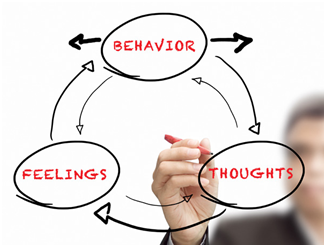
Cognitive behavioral therapy (CBT) teaches you, through discussion, how to recognize and cope with stressful influences in your life. It can help you understand how your thoughts and behavior patterns influence your symptoms, and how to change the way the body responds to anticipated pain.
~ Acceptance and Commitment Therapy (ACT)
Acceptance and commitment therapy is an empirically-based psychological intervention that uses acceptance and mindfulness strategies mixed in different ways with commitment and behavior-change strategies, to increase psychological flexibility. The objective of ACT is not elimination of difficult feelings; rather, it is to be present with what life brings us and to move toward valued behavior. Acceptance and commitment therapy invites people to open up to unpleasant feelings, and learn not to overreact to them.
~ Therapy for Phobias
We provide specialized therapy for a wide range of phobias and anxiety disorders. Our evidence-based approach uses Exposure and Response Prevention (ERP) and Cognitive Behavioral Therapy (CBT) to help you confront and overcome irrational fears, whether related to specific objects, situations, social anxiety, or health concerns. Treatment is gradual, compassionate, and tailored to your individual needs.
~ Group Therapy for OCD
We offer therapeutic group therapy for OCD led by Dr. Henry Srednicki. The primary focus is on response prevention and exposure. Group therapy provides a supportive environment where members practice skills together, share experiences, and build confidence in managing OCD.
WE’RE HERE TO HELP YOU
LEARN THE RIGHT STRATEGIES TO SET YOURSELF FREE.
You have more control, than you think.
543 Valley Road, suite 6 Upper Montclair NJ 07043
NY City Address of 30 West 63rd Street New York, NY 10023
973-744-9130
CONTACT NOW! Dr. Henry Srednicki