Expert OCD Treatment — Now Available to Virginia Residents
If you live in Virginia and are struggling with OCD, specialized evidence-based treatment is now available via telehealth. Dr. Hank Srednicki, a nationally recognized OCD specialist based in New York and New Jersey, offers comprehensive telehealth OCD therapy to Virginia residents — from Northern Virginia and Arlington to Richmond, Virginia Beach, Norfolk, Charlottesville, Roanoke, and beyond.
Why Virginia Residents Struggle to Find OCD Specialists
Virginia is home to one of the most densely populated and high-achieving corridors in the country — the Northern Virginia suburbs of Washington, DC. Yet even in this resource-rich region, finding a therapist with genuine training in Exposure and Response Prevention (ERP) — the gold-standard OCD treatment — is harder than it should be. Outside of Northern Virginia and Richmond, the challenge becomes even greater: Hampton Roads, the Shenandoah Valley, Southwest Virginia, and the Eastern Shore have very limited access to specialized mental health care of any kind.
Virginia's large military presence creates a particularly important treatment gap. Major installations including Fort Belvoir, Quantico, Langley, Naval Station Norfolk, and Joint Base Langley-Eustis bring hundreds of thousands of active-duty service members and veterans to the state. OCD is more common in veterans than in the general population, and military culture's emphasis on toughness and self-reliance makes it especially unlikely to be disclosed or treated without accessible options like telehealth.
Who Dr. Srednicki Treats in Virginia
Dr. Srednicki treats Virginia adults, teens, and children across the entire state — from the DC suburbs of Fairfax, Arlington, and Alexandria, to students at UVA, Virginia Tech, William & Mary, and George Mason, to military families at coastal installations, to residents of rural Southwest Virginia who have had no prior access to OCD-specialized care.
Telehealth OCD therapy is just as effective as in-person treatment — backed by clinical research
No need to travel — get specialized ERP therapy from a certified OCD specialist anywhere in Virginia
Dr. Srednicki is authorized to treat Virginia residents and accepts telehealth clients statewide
~ OCD & Sex Addiction in Virginia: A Specialized Focus
One of the most complex and misunderstood presentations Dr. Srednicki treats is the co-occurrence of OCD and Compulsive Sexual Behavior Disorder (CSBD) — commonly referred to as sex addiction. Virginia residents dealing with this combination often struggle in silence, unable to find a therapist who understands both conditions and how they interact.
When OCD and sex addiction co-occur, they reinforce each other in ways that make both conditions significantly worse:
- Sexual behavior as a compulsion: Sexual acts become rituals used to neutralize OCD anxiety — repeating behaviors until something "feels right" or using sexual activity to temporarily silence intrusive thoughts
- Intrusive sexual thoughts misread as addiction: OCD-driven intrusive sexual thoughts (unwanted, fear-based, ego-dystonic) are mistakenly treated as compulsive sexual behavior — leading to shame spirals and wrong treatment
- Shame and secrecy: Shame intensifies both OCD obsessions and addictive sexual cycles simultaneously, making both harder to treat without an integrated approach
- Misdiagnosis is common: Without a clinician trained in both OCD and CSBD, one condition is often treated in a way that makes the other worse
Dr. Srednicki has specialized training in both OCD and Compulsive Sexual Behavior Disorder, making him one of the few clinicians in the country — and now accessible to all of Virginia via telehealth — who can properly diagnose and treat this complex combination.
~ Other OCD Subtypes Treated via Telehealth in Virginia
In addition to OCD and sex addiction, Dr. Srednicki treats all OCD subtypes, including:
- HOCD (Sexual Orientation OCD): Intrusive doubts about sexual orientation causing intense distress and compulsive checking
- POCD (Pedophilia OCD): Unwanted, ego-dystonic intrusive thoughts involving children — one of the most misunderstood OCD subtypes
- ROCD (Relationship OCD): Relentless doubt about relationships, partners, and feelings of love
- Scrupulosity/Religious OCD: Fear of sin, blasphemy, or moral contamination interfering with daily life and faith
- Harm OCD: Intrusive fears of accidentally or intentionally harming oneself or others
- Pure O OCD: Purely obsessional OCD with mental rather than visible compulsions
- Postpartum OCD: Intrusive thoughts affecting new and expecting mothers
- Health Anxiety/Hypochondria: Persistent fears about illness and medical conditions
- Trichotillomania & Dermatillomania: Hair pulling and skin picking disorders
- Just Right OCD, Rumination OCD, Existential OCD and many more
~ Virginia-Specific Considerations for OCD Treatment
Virginia's identity as both a government hub and a deeply military state shapes how OCD presents among its residents. In Northern Virginia, the concentration of federal employees, intelligence professionals, lawyers, and contractors creates a culture of hyper-responsibility and perfectionism. OCD in this population often presents as checking compulsions (checking work for errors obsessively), excessive moral scrupulosity, and harm OCD ("what if I made a mistake that hurts someone?") — symptoms that can go unrecognized for years because they resemble professional diligence.
Virginia's large military and veteran population presents another distinct OCD profile. Combat-related hypervigilance can intersect with OCD in ways that make diagnosis complex. Veterans with harm OCD or PTSD-OCD overlap often receive one diagnosis but not the other — leaving part of the clinical picture untreated. Dr. Srednicki has experience working with veterans and active-duty service members and understands this intersection well.
Virginia also has a significant religious community across its rural regions and in cities like Richmond. Scrupulosity OCD — obsessive religious or moral fears — is prevalent but undertreated in these communities, where sufferers often seek pastoral guidance instead of clinical care, only to find that reassurance from clergy feeds the OCD cycle rather than resolving it.
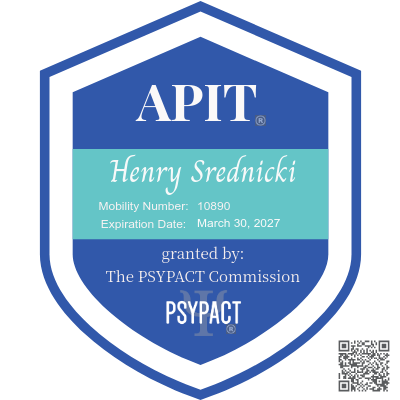
Virginia is a PSYPACT member state. Dr. Srednicki is fully authorized to provide telehealth psychotherapy to Virginia residents through the PSYPACT interstate compact — fully legally and at the same standard of care as in-person treatment.
~ Integrated Treatment for OCD & Sex Addiction in Virginia
Because OCD and Compulsive Sexual Behavior Disorder interact and reinforce each other, treatment must be coordinated — not siloed. Dr. Srednicki's integrated approach includes:
- Exposure and Response Prevention (ERP) — the gold-standard OCD treatment, targeting obsessions and breaking the compulsion cycle, including sexual compulsions driven by OCD anxiety
- Cognitive-Behavioral Therapy (CBT) — for both OCD thought patterns and compulsive sexual behavior, including trigger identification and relapse prevention
- Acceptance and Commitment Therapy (ACT) — developing psychological flexibility and values-based living, reducing shame-driven cycles
- Distress tolerance skills (DBT-informed) — addressing the emotional dysregulation that drives both OCD and compulsive sexual behavior
- Shame reduction and psychoeducation — helping clients understand the critical difference between OCD intrusive thoughts, compulsions, and addictive behavior
Telehealth sessions are conducted via a HIPAA-compliant secure video platform, making it easy to participate from anywhere in Virginia — whether you are in Richmond, Virginia Beach, Arlington, Charlottesville, Norfolk, Alexandria, or any smaller community.
~ About Dr. Hank Srednicki
Dr. Hank Srednicki is the founder of the New York-New Jersey Center for OCD and one of the few practitioners in the country with deep specialized training in both OCD and Compulsive Sexual Behavior Disorder. He is authorized to provide telehealth therapy to residents of Virginia and 41 other states through PSYPACT and individual state licensure. Unlike general therapists, Dr. Srednicki focuses exclusively on OCD and related disorders — meaning Virginia clients dealing with OCD, sex addiction, or both receive the highest level of specialized care available nationwide.
~ Getting Started Is Simple
To begin telehealth OCD or OCD & sex addiction therapy in Virginia, simply contact the New York-New Jersey Center for OCD to schedule a free consultation. No referral is needed. Sessions are conducted online at a time that fits your schedule, and Dr. Srednicki works with adults, adolescents, and children throughout Virginia and across the country.
~ Getting Started: OCD Telehealth in Virginia
Virginia residents can begin the intake process with Dr. Srednicki online or by phone. The initial consultation includes a comprehensive OCD assessment so that treatment starts immediately with a targeted, personalized plan — not vague supportive therapy, but structured ERP that produces real, lasting results.
~ Frequently Asked Questions — Virginia Residents
Is Dr. Srednicki licensed to treat patients in Virginia?
Yes. Dr. Srednicki is authorized to practice telehealth in Virginia through PSYPACT, the interstate compact for licensed psychologists. Virginia is a PSYPACT member state.
What areas of Virginia does Dr. Srednicki serve?
All of Virginia. Dr. Srednicki serves OCD patients in Arlington, Alexandria, Fairfax, Reston, McLean, Falls Church, Herndon, Manassas, Richmond, Virginia Beach, Norfolk, Chesapeake, Newport News, Hampton, Charlottesville, Roanoke, Lynchburg, Blacksburg, Winchester, and every other city and community in the state.
I'm active-duty military — can I use telehealth for OCD treatment?
Yes. Telehealth works well for active-duty service members and veterans. Sessions can be conducted from any private space with an internet connection, including on base. Many service members find telehealth preferable as it avoids the potential stigma of being seen entering a mental health clinic on base.
How is OCD different from PTSD, and how do I know which I have?
OCD and PTSD can look similar — both involve intrusive thoughts and avoidance. The key distinction is that OCD intrusive thoughts are ego-dystonic (feel completely inconsistent with the self) and are often not trauma-linked, while PTSD is rooted in a specific traumatic event. Many veterans have both. A proper evaluation with Dr. Srednicki can clarify the diagnosis and create a treatment plan addressing all presenting conditions.
WE’RE HERE TO HELP YOU
LEARN THE RIGHT STRATEGIES TO SET YOURSELF FREE.
You have more control than you think.
Secure video sessions in New York, New Jersey & 40+ PSYPACT states
973-744-9130
CONTACT NOW!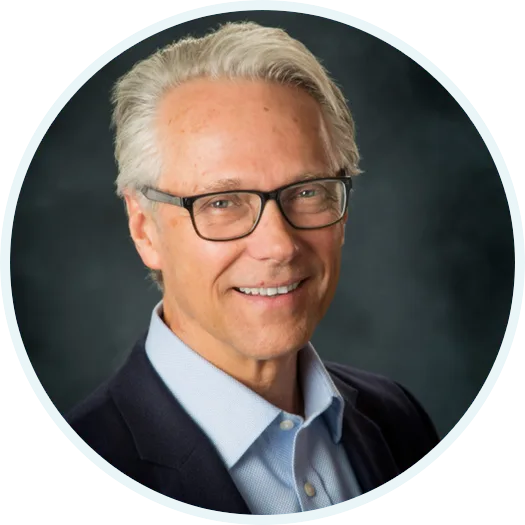 Dr. Hank Srednicki